
Ami Magazine's Lunch Break column profiles Yehuda (Leo) Spitz — entrepreneur, maggid shiur, and founder of BidMaster Solutions and DoberMe — in its Shavuos 2026 issue. The conversation, conducted by Nesanel Gantz, covers Leo's path from Lakewood to a portfolio of ventures, the operating principles behind BidMaster, the launch of DoberMe, and how he structures a weekly schedule that puts Torah learning at the center, not the margin.
The piece runs in the magazine's Business section and frames Leo as a serial operator whose unusual edge isn't sales charisma — it's process. He doesn't sell dreams, he doesn't believe in secrets, and he guards his reputation aggressively. He gives 13 shiurim a week, runs a four-day work week, and works on a 168-hour planning horizon instead of a daily to-do list.
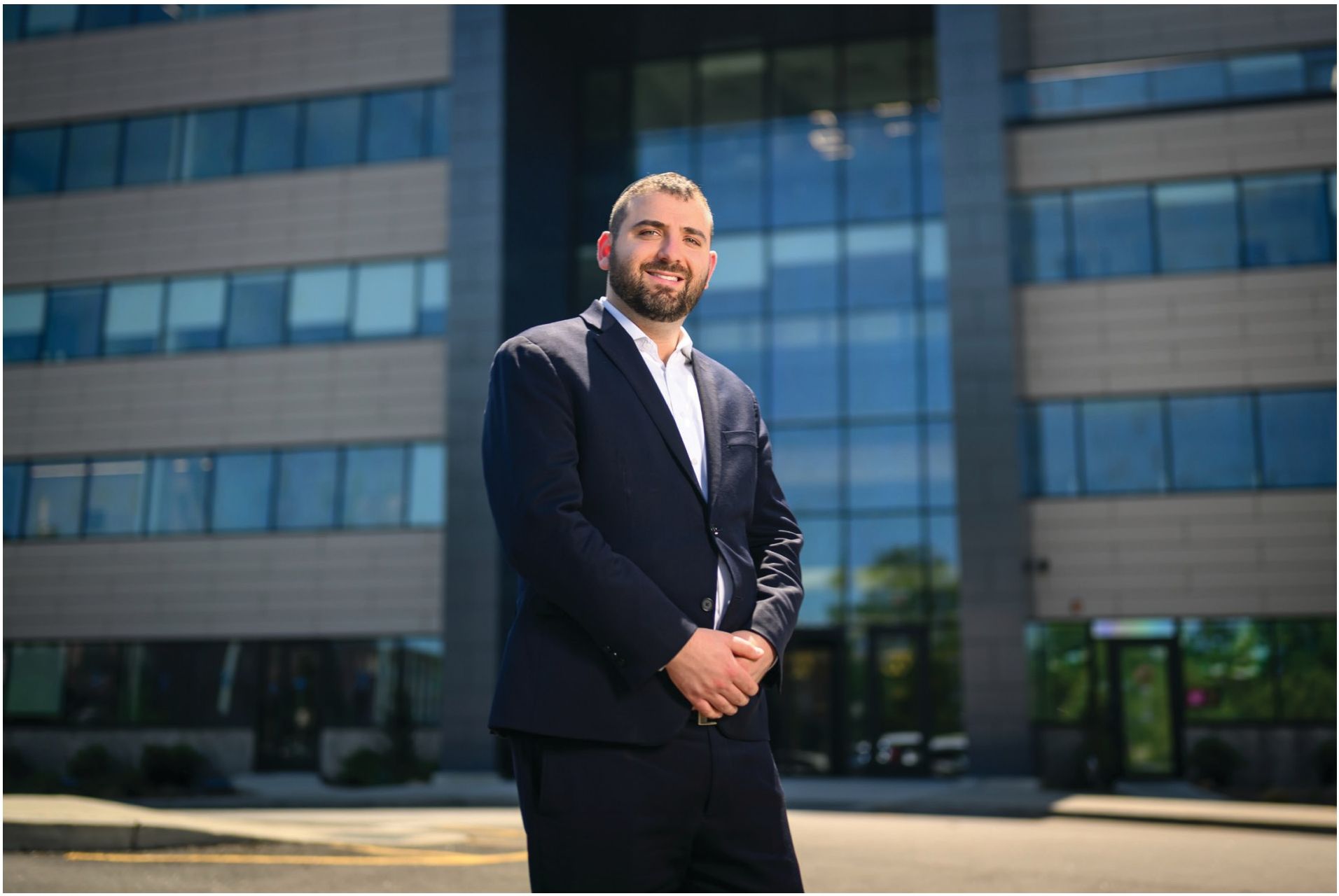
Background: Lakewood, Yeshivah, and an Unconventional Path
Born in Eretz Yisrael and raised in Lakewood as one of fourteen children, Leo describes a close, high-energy family shaped by a mother who is "the matriarch, the queen of the family" — a strong baalas chesed who has carried the family through serious illness with what Leo calls a refusal to develop a victim mentality. He learned in Rav Uren Reich's yeshivah in Woodlake Village, then in Rabbi Moldaver's beis midrash in New City, and went straight from a post-Eretz Yisrael yeshivah in Monsey into a shidduch at twenty-one. After roughly five years in Reb Motti Piller's halachah kollel, he took his first job — in landscaping, of all places — and stumbled into the world of government contracting in his first week of work.
How BidMaster Solutions Was Born
The pivot came through a fencing contractor he met every Sunday at Sheiner's. Watching an MWBE-certified shop pull in grant-funded fencing work, Leo realized the bottleneck for most companies wasn't operational ability — it was the paperwork, compliance, and relentless focus that government contracting demands. He called his friend, told him, "I opened a new company," and was asked how long ago. His answer: ten minutes ago. Two days before his son's bris, he was sitting at his first client's house making a l'chaim. BidMaster Solutions was built on the bet that if you can standardize the system and execute it over and over, the money follows.
"I learned from that process that winning contracts takes extreme focus and strategy, but not necessarily sales skills."
Today BidMaster runs on three services — the bidding itself (the bread and butter), post-bid management, and certifications, which is roughly a quarter of the business. About 75% of bids are construction-related; another 20% are supplies, furniture and medical equipment; the remainder are talent-based industries that are harder to bid. Pricing is split between management fees (essentially hourly) and performance-based commissions, with certifications priced as a flat fee. Leo deliberately shifted the company from a brokerage model to a management firm — at scale, getting paid only on wins exposes you to client decisions you don't control.
Three Foundations: No Dreams, No Secrets, Reputation Above Everything
Leo still has the paperwork from his first employee signing, where he wrote down the three principles BidMaster runs on. One: don't sell dreams. Government contracting attracts people who want a fast jackpot; the firm will tell a prospect openly when the math doesn't work. Two: there are no secrets. The edge is hard work and familiarity, not a hidden shortcut. Three: reputation is everything. Leo will absorb a five-figure loss before he'll let a misunderstanding harden into a bad name. Twice in the interview he describes pesharos he paid personally — $3,000 in one case, $9,000 in another — rather than fight.
"I'm willing to lose money faster than losing my reputation."
MWBE Certifications and Why They Move Millions
A significant portion of the interview explains MWBE certification — Minority and Women-Owned Business Enterprise — and why it has become urgent in the heimish construction market. New York requires a percentage of contracts to go to MWBE-certified firms, and many contracts allow certified companies to come in roughly ten percent higher and still win. New York City's 485-x tax abatement program has pushed demand even higher: many projects now require around 25% MWBE participation, which means general contractors are scrambling to find certified subs within tight deadlines — sometimes minutes before a contract gets pulled.
Approval is hard by design. Leo describes the process as more rigorous than most mortgages, with denials possible on questionable appearances alone. BidMaster runs a dedicated certifications department, led by a woman with more than twenty years in the space, and a large share of clients first arrive needing certification and later become bidding clients. He also tells the story of a fencing job at Sing Sing Prison that was pulled mid-installation from another company and re-awarded to his woman-owned employer — a vivid illustration of how much weight the certification carries.
DoberMe: An Uber for Security Guards
DoberMe — named for the Doberman, a watchdog — is Leo's marketplace for security guards and traffic-control workers, with planned expansion into lifeguards, EMTs, and baby nurses. The thesis came from watching Swimply and Poplin succeed by going deep on a single niche, and from realizing that many people hold credentials they never monetize. Security was the right first vertical because it's business-to-business and doesn't require changing consumer behavior. He had an MVP built in eleven days, posted a single video produced by Ari Samet of Abissel Status, and the platform "exploded overnight." Today DoberMe has roughly 600 guards signed up and is running jobs seven days a week across New York and New Jersey, with hundreds of thousands of dollars in bookings and almost no formal sales or marketing yet.
"If your product is perfect, you're already too late. Just get out there and do it."
The Shiurim: 13 a Week, and the Discipline Behind Them
Leo's shift toward intensive learning began at an Adirei HaTorah event, where the sight of thousands of contented yungeleit cemented who he wanted to be. He started Daf Yomi mid-cycle in Bava Kama — almost by accident, the daf for the next morning — and a chance fill-in at a Pesach program convinced him he had to give shiurim.
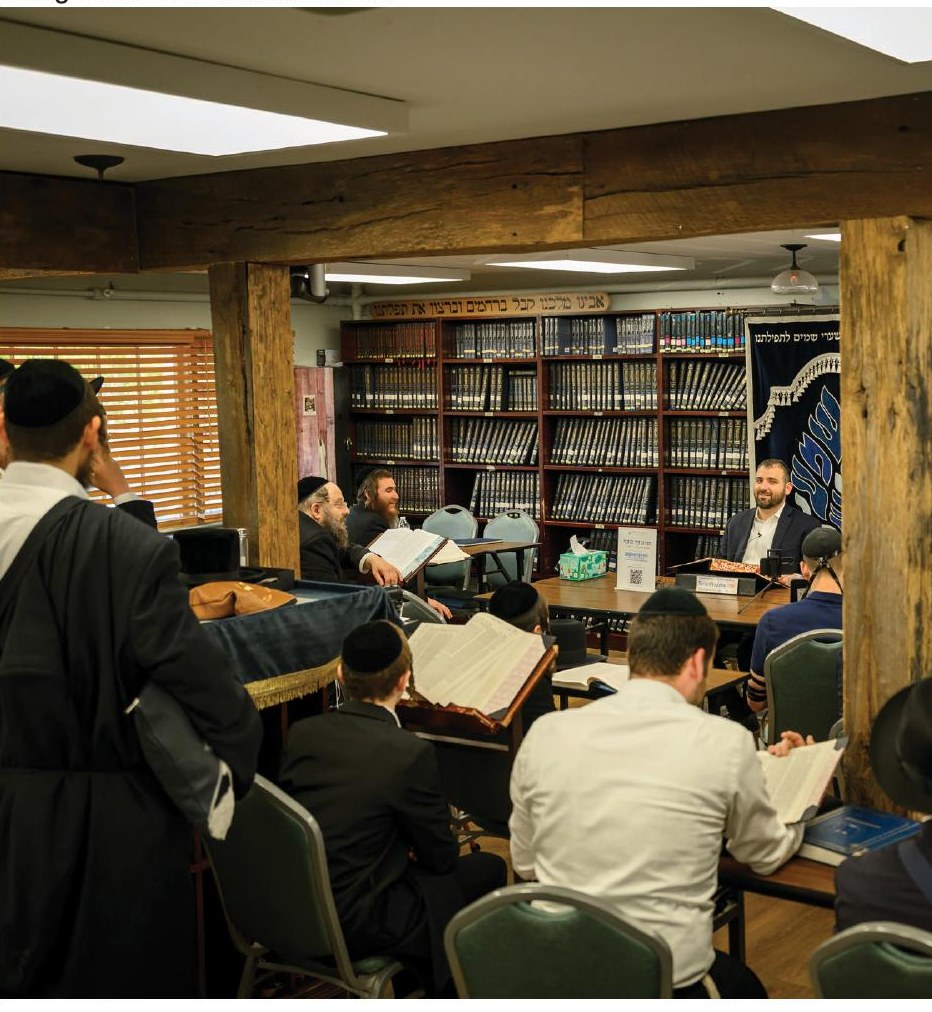
Today he gives thirteen shiurim a week: a daily Daf Yomi shiur, a daily Mishnah Brurah shiur (five days a week, plus separate Mishnayos Yomi and Chofetz Chaim), and a unique Sunday Chazaras HaDaf shiur at Sheiner's that reviews all seven dapim from the previous week in two intense hours. The Sunday shiur now reaches a few hundred people on YouTube and is carried on TorahAnytime, where, by his account, no one else gives a seven-blatt chazarah shiur in English.

He commits one masechta at a time rather than to finishing Shas — a deliberate choice to remove pressure and protect long-term consistency.
Systems, Schedule, and a Tablet Instead of a Smartphone
Leo plans on a weekly basis — 168 hours — not a daily one. His core work week is Monday through Thursday: BidMaster on Monday, DoberMe on Tuesday and Wednesday, strategic work on Thursday, with a Tuesday-night date night with his wife built in non-negotiably. Friday through Sunday afternoon belong to the shiurim and to family. Sunday he goes into the office for sixty to ninety minutes to plan the upcoming week.
"If you prepare for the week on Sunday, by the time you walk in on Monday morning, you'll be much more advanced. You won't be so reactive, and you'll actually get things done."
He operates with a flip phone and an oversized tablet, on purpose. The flip phone keeps his personal number simple; the tablet is large enough that he can't carry it casually around town — which forces focus and creates deliberate pauses. He runs virtual meetings almost exclusively, capped at 15, 30, or 45 minutes, and relies on an assistant to convert in-the-moment commitments into calendar invites within minutes. He's blunt about EOS: borrow the common-sense pieces, but don't let "doing EOS right" replace actually thinking.
Handling Stress, Mindset, and Medical Challenges
Leo separates stress into two categories. Overload stress — too many cylinders firing at once — he solves with a complete reset: a few hours off, no screens, dinner with a friend, a real break. Structural stress — about direction, hiring, payroll — calls for a small bench of trusted mentors who know the company well enough to give honest, common-sense outside perspective. He's open about his own ongoing medical issues and credits mindset paired with action for keeping him functional through difficult stretches.
"Staying positive is not just some emotional concept or motivational line. It has a real physical effect."
Closing: Advice for Busy People Who Want to Learn
Leo's closing message is directed at busy ba'alei batim. The argument isn't that quiet people should learn — it's that the busier you are, the more learning you need, because it brings structure and lessens chaos. Start small, with a chavrusa, for two weeks. Don't commit to five years. Don't think about the mountain. Once you taste it, it builds on itself.
"When a ben Torah is working so hard that he feels he doesn't have enough time to learn, he needs the learning more than anyone — because it will make him more settled."
He attributes everything — the businesses, the shiurim, the schedule — first to his wife, then to shemiras einayim and limud haTorah. The recurring line is simple: run your business around your learning, not the other way around.
This page is an editorial summary of the full Ami Magazine Lunch Break interview with Yehuda (Leo) Spitz, conducted by Nesanel Gantz and published May 18, 2026 (Ami Business, Issue 768). For the complete article, please use the embedded viewer below or download the original PDF.